




Hospital narcotics storage means keeping Schedule II through V controlled substances in a securely locked, substantially constructed cabinet, with effective controls against theft and diversion. Those security requirements sit in 21 CFR Part 1301. Meeting the cabinet-and-lock baseline is rarely where hospitals fall short. Proving the controls under a DEA audit is.
Updated May 2026.
A 2024 national survey of U.S. hospital pharmacies found something worth noting. Physical security such as cameras showed high compliance, while monitoring and auditing of those measures showed lower compliance. That gap, not the safe itself, is what surfaces in a DEA audit. This guide covers seven best practices for hospital narcotics storage, each tied to the rule behind it, plus how NarcLock closes the audit-trail gap without replacing your storage.
Why hospital narcotics storage gets flagged in audits
Diversion is rarely an outsider breaking in. It’s more often a staff member with legitimate access. The same peer-reviewed research describes controlled substance diversion in healthcare facilities as something that “is not rare and is often underreported.”
That’s why the DEA cares less about your safe brand than about your controls. 21 CFR 1301.71 requires every registrant to “provide effective controls and procedures to guard against theft and diversion.” It names no product and no specific lock. An inspector looks at the whole system: who holds access, how each open is recorded, and how fast you would catch a discrepancy.
The risk is concrete. One failure-mode analysis of controlled substance handling in a hospital pharmacy identified 220 distinct failure modes, roughly 15% of them rated critical for diversion risk. The American Society of Health-System Pharmacists, in its 2022 Guideline on Preventing Diversion of Controlled Substances, identifies storage as one of the key risk points across the medication-use process. Under 21 CFR 1301.71, the DEA evaluates a facility’s whole system of controls, so strong hospital narcotics storage is built around that view, not around a single lock.
Seven hospital narcotics storage best practices
- Lock it in a substantially constructed cabinet, then anchor it. 21 CFR 1301.75(b) requires practitioners to keep Schedule II through V controlled substances in a securely locked, substantially constructed cabinet. Anchoring a light safe or cabinet to the floor or a wall is a widely recommended security practice, and DEA rules require it for safes under 750 pounds held by non-practitioner registrants. An unanchored safe is a safe someone can carry out.
- Grant access by role, not by habit. The list of people who can open a narcotics safe tends to grow quietly. Trim it. A float nurse, a pharmacy technician, and a maintenance contractor shouldn’t all carry the same standing access. Decide who actually needs it and drop everyone else.
- Kill shared keys and shared codes. A code three people know identifies no one. Every open should trace to a single named person, and the system should log the denials too. A run of failed attempts on one cabinet is often the first sign of a problem.
- Make revocation instant. When someone leaves, changes roles, or loses a key, their access should be gone that day, not at the next rekey. Set temporary access for travelers, locums, and vendors to expire on its own, so nobody has to remember to switch it off.
- Count, reconcile, and keep the paper. Run an initial inventory when you start handling controlled substances and a biennial count at least every two years under 21 CFR Part 1304. Keep those records for two years. Back the formal count with perpetual counts, and chase down every discrepancy while the trail is still warm.
- Screen the people with access. 21 CFR 1301.76 says registrants shouldn’t give controlled substance access to anyone convicted of a felony tied to controlled substances, or whose DEA registration was denied, revoked, or surrendered, unless a waiver is in place.
- Write the theft and loss SOP before you need it. Discover a theft or significant loss and you have one business day to notify the DEA in writing, plus a DEA Form 106 to file. A short written procedure, including how to pull access history, turns a stressful day into a checklist.
Where NarcLock fits in hospital narcotics storage
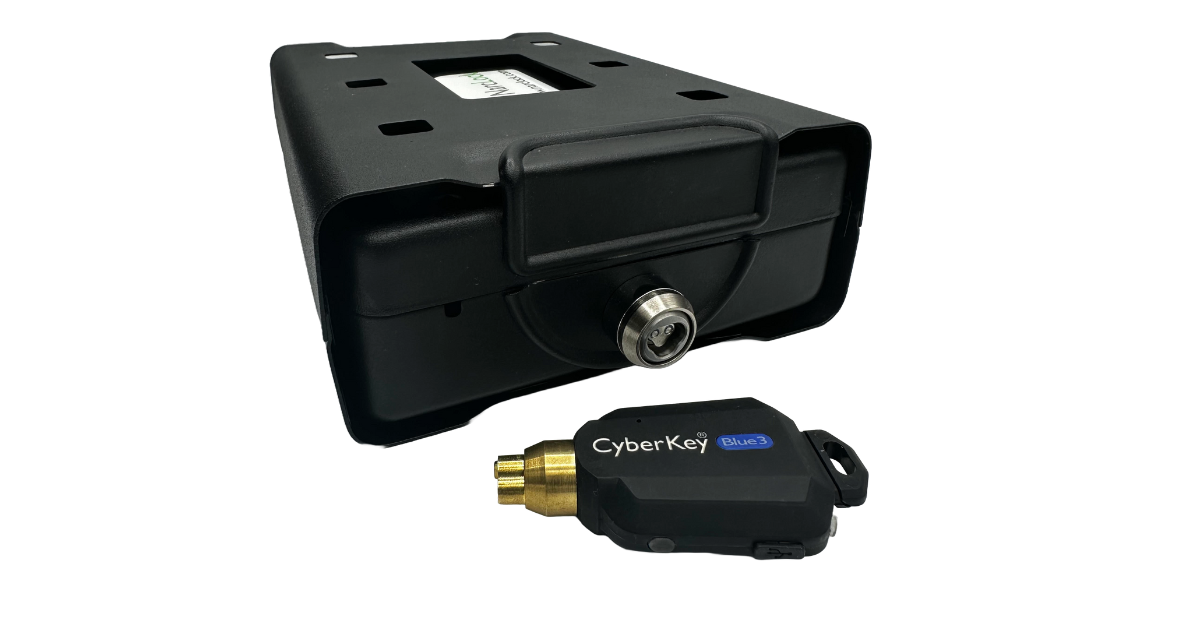
NarcLock is an offline, wireless access control system. It puts a smart electronic lock on the safe, cabinet, or storage solution you already use, and records every open and every denied attempt. It runs on proven CyberLock technology, so it’s a familiar electronic lock and key. You’re not reinventing how staff reach medication. You’re adding accountability where a wired card reader can’t go.
No power, no wires, no wifi at the lock
Traditional electronic access control needs power and cabling run to every door or cabinet. That’s costly in a med room and often impossible on a safe, a med cart, or an interior cabinet. NarcLock’s electronic cylinder needs none of it. The NarcKey carries the power and energizes the lock at the moment of use.
The payoff is maintenance. No batteries to swap at the safe, no wiring to fault, no network connection to lose. Compared with wired or wifi-connected cabinet locks, there is far less to service at the point of storage, which matters when you manage access across a whole pharmacy or a multi-site system.
It works with the storage you already have
You keep your current safe or cabinet. NarcLock retrofits the lock cylinder, so the upgrade fits into day-to-day operations without disrupting workflow or forcing new hardware on your staff. With more than 450 retrofit designs, the cylinder matches common form factors. If you don’t have suitable storage, or you don’t like what you have, NarcLock can help you source a compliant safe or cabinet.
One platform, not just the narcotics safe
The narcotics safe is the starting point, not the limit. The same NarcKey and the same software manage interior doors, supply rooms, lab equipment, and cabinets across the facility. A single key can be programmed for more than 1,000 locks, each with its own permissions and time windows. That means one audit trail, one access policy, and one system to administer, instead of a separate product for every locked thing you own.
NarcLock is a compliance tool. It is not itself approved or endorsed by the DEA or FDA. It helps you build and prove the controls those agencies expect. Here is how our wireless access control hardware lines up with the seven practices above.
| Best practice | How NarcLock helps |
|---|---|
| Locked, substantially constructed storage | Electronic cylinders retrofit into your existing narcotics safes and cabinets. You upgrade the lock cylinder, not the safe. |
| Role-based access | NarcKey smart keys carry per-user permissions and time-limited access windows. |
| An audit trail you can defend | Every open and every denial is recorded in the key and the lock. Pull reports by user, location, date, or result. |
| Instant revocation | Deactivate a lost key or a former employee in software, and it stops opening any NarcLock-secured storage. |
| Inventory support | Logs show who opened storage before, during, and after a count, so discrepancies are easier to trace. |
| Theft and loss response | Export the full access history to back up a DEA Form 106 narrative and timeline. |
A hospital narcotics storage checklist
- DEA registration is current for this location and activity.
- Schedule II through V stock sits in a securely locked, substantially constructed cabinet, anchored where practical.
- The access list is documented and trimmed to role-based need.
- No shared keys or shared codes anywhere.
- Every open and every denial is logged and quick to retrieve.
- Revocation is tested. You can cut a person’s access in minutes.
- Initial and biennial inventories are done and held for two years.
- The theft and loss SOP is written, with same-day DEA notification and Form 106 steps.
For a regulation-by-regulation walkthrough, see our 2026 DEA storage requirements checklist and our overview of controlled substance regulations.
Hospital narcotics storage FAQ
What does the DEA require for hospital narcotics storage?
Practitioners must keep Schedule II through V controlled substances in a securely locked, substantially constructed cabinet under 21 CFR 1301.75, and maintain effective controls against theft and diversion under 21 CFR 1301.71. The DEA evaluates the whole security system rather than mandating one product, and many states add stricter rules. The DEA Practitioner’s Manual is a useful federal reference.
Do hospital narcotics cabinets have to be bolted down?
It depends on the registrant. DEA security rules explicitly require a safe or steel cabinet under 750 pounds to be bolted or cemented in place for non-practitioner registrants under 21 CFR 1301.72. Hospitals are practitioners under 21 CFR 1301.75, which requires a securely locked, substantially constructed cabinet without naming a weight. Anchoring a light cabinet is still a widely expected best practice, and state rules can be stricter, so confirm your own requirements before an install.
How long must controlled substance records be kept?
Federal rules require controlled substance records, inventories included, to be kept for at least two years and available for DEA inspection. Some states require longer retention, so check your state board of pharmacy rules alongside the federal minimum.
How do hospitals prevent drug diversion by staff?
The strongest controls make every access individually attributable, eliminate shared keys and codes, revoke access immediately when roles change, and audit logs for unusual patterns. Physical security alone is not enough. A 2024 survey of hospital pharmacies found cameras were widely deployed but less consistently monitored.
Can you add electronic access control without replacing the safe?
Yes. A retrofit system like NarcLock replaces only the lock cylinder in your existing safe or cabinet, with no wiring or power needed at the lock. You keep your storage hardware and add electronic permissions and a full audit trail, which avoids the cost and disruption of new cabinets.
What records help during a DEA inspection?
Inspectors look for current registration, accurate initial and biennial inventories, dispensing and administration records, a documented theft and loss procedure, and proof of who accessed storage. An electronic access log that reports by user, date, location, and result makes that proof fast to produce.
Strengthen your hospital narcotics storage today
You don’t need new cabinets to close the gap in most hospital narcotics storage. You need a record. NarcLock adds an individually attributable audit trail to the storage your pharmacy already runs, with no wiring and no battery at the lock, and the same system extends to doors and cabinets across your facility. Take a look at the hospital narcotic lock box, or request a free pilot and test it in your own pharmacy.
Compliance note: This article summarizes federal requirements and links to the primary source at the CFR. It is not legal advice. Confirm your state’s requirements before changing cabinets, credentials, or procedures.